






About
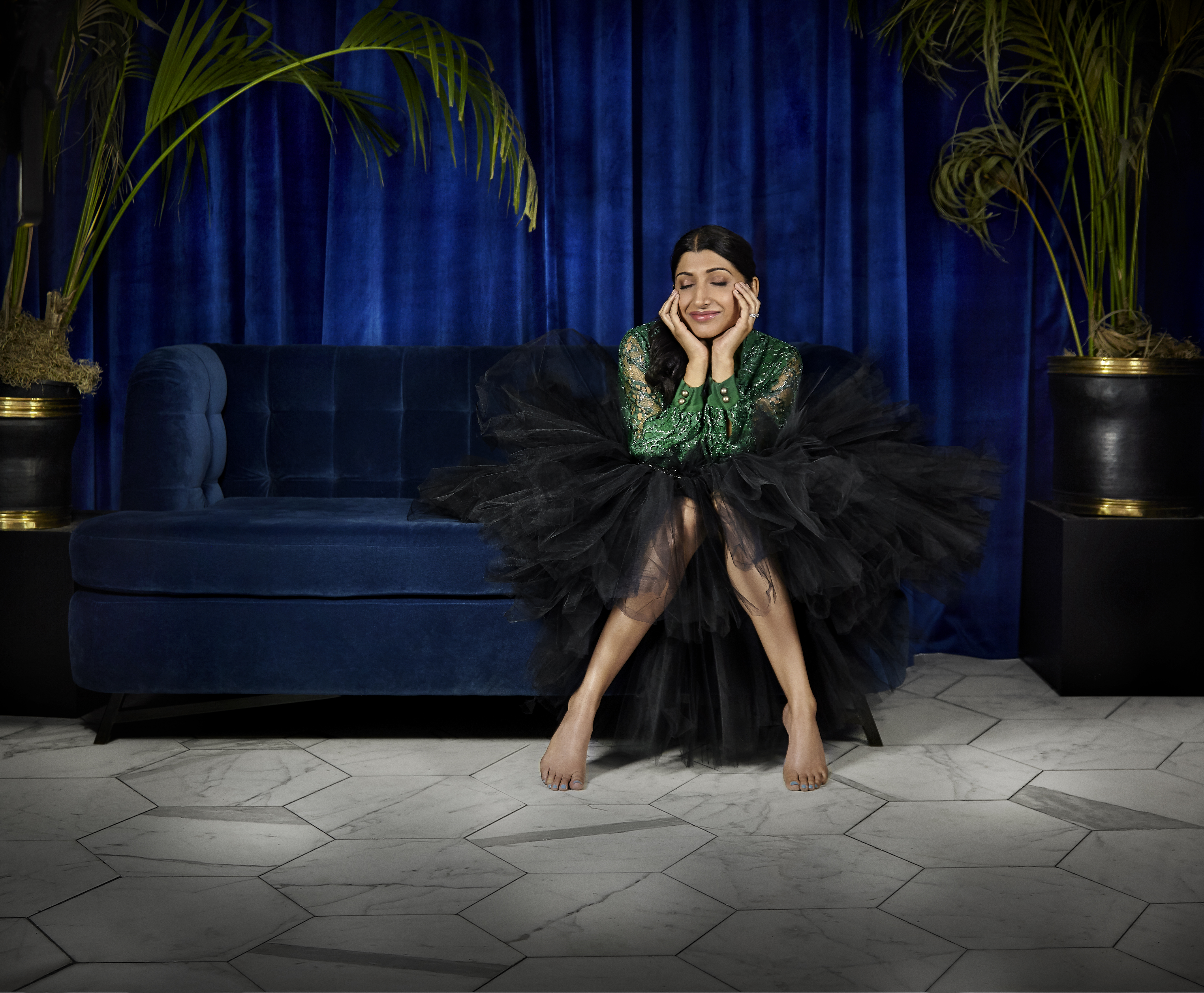
Armed with lyrical wit, virtuosic piano runs, and a sultry-sweet voice that hearkens back to the golden age of jazz, Atlanta-based songwriter Anita Aysola is a deft musical mixologist who seamlessly infuses jazz and blues with classic rock and traditional Indian influences.
Her debut album More Than Maybe showcases her songwriting prowess and broad ...
Contact
Current News
- 08/21/201908/30/2019
Anita Aysola releases a powerfully defiant, jazz-infused anthem of women’s rights with her latest single and music video “Heartbeat”
India-born, Atlanta-based singer-songwriter, teacher, and political activist Anita Aysola remembers the hopeless feeling of a sinking collective heart that day. It was on May 7, 2019, when Georgia’s Republican governor signed into law one of the nation’s most restrictive pieces of anti-abortion legislation to date, effectively banning abortion after six weeks of pregnancy, when doctors can detect the fetal heartbeat – a stage of embryonic development that often occurs before...
- Rolling Stone India, Video premiere, 08/26/2019, Exclusive Premiere: Indian-American Anita Aysola Rallies For Women’s Rights on ‘Heartbeat’ Text
- Ms. Magazine, Event preview, 08/27/2019, We Heart: Anita Aysola’s Anthem for Abortion Activists Text
- Now This, Highlight, 08/30/2019, ‘Heartbeat’ by Anita Aysola Pays Tribute to Women After GA Abortion Ban Text
- Yahoo! Lifestyle, Feature story, 09/03/2019, ‘Heartbeat’ by Anita Aysola Pays Tribute to Women After GA Abortion Ban Text
- + Show More
News
India-born, Atlanta-based singer-songwriter, teacher, and political activist Anita Aysola remembers the hopeless feeling of a sinking collective heart that day. It was on May 7, 2019, when Georgia’s Republican governor signed into law one of the nation’s most restrictive pieces of anti-abortion legislation to date, effectively banning abortion after six weeks of pregnancy, when doctors can detect the fetal heartbeat – a stage of embryonic development that often occurs before many women even realize they are pregnant. Like millions of others across the country determined to fight the impending war on women's rights, Anita had gotten involved as a citizen, made calls to her senators and representatives, written letters to the governor, voted consistently, protested, and marched against the awful things happening in the American political landscape the last few years. But now the state was actually restricting women’s autonomy over their own bodies. She felt stifled, angry, paralyzed.
For Aysola, music is catharsis. She knows that, sometimes, the only thing that will make her feel better is sitting down at the piano to write; so that’s what she did. There, she didn’t feel so helpless. She thought about the cold irony of the right-wing pundits, dubbing such an oppressive law “the heartbeat bill” while ignoring the living, beating hearts of the women it disempowers. “What about us? What about women?” she thought, “can you hear our heartbeat?”
That moment bursts into a powerfully defiant, jazz-infused anthem with the production of “Heartbeat,” her latest single and music video in collaboration with members from the women’s vocal social-action powerhouse Resistance Revival Chorus. Produced by Samrat Chakrabarti and Aysola herself, and engineered by John Clark, "Heartbeat" confronts head-on a timely issue that faces American women under an increasingly hostile political regime.
A mother of two beautiful children with a loving marriage and a wonderful career, Aysola knows if motherhood can at times be tough for someone as lucky as her, then legislation such as the “heartbeat bill” can only further oppress less fortunate women. “I want women to feel empowered when they hear the song,” she says, “to remember their own strength and remember that we aren't helpless, we aren't powerless. We can make change. And, you know, we are kind of nipping at their heels. We're making strides even when it feels like we're not.”
Spurred by a passionate distaste for inequality, she wrote “Heartbeat” quickly, in the three-week span of time in which the Georgia bill was introduced and signed, finishing just after a similar bill was imposed on the women of Alabama. A month later, she was in New York recording. Four members from Resistance Revival Chorus were invited to the studio, as well as Aysola’s sister-in-law, an opera and musical theater singer. All of them women of color, who believe strongly in this cause. As Aysola taught the singers the harmonies she’d come up with and they began to crank through the song, the raw magic of the moment was caught on film by the video’s producer/cinematographer Cameron S. Mitchell. In an impressive feat, he recorded all of the footage on the fly in just two days of following the musicians around to the studio, working around the various constraints of a working studio to capture video wherever he could without interfering with the process.
Known for her unique style of bridging Indian and American jazz, Aysola notes that “Heartbeat is a more politically charged track that doesn’t contain any overtly Indian instrumental elements. However, she does return to the inclusion of more of her signature Indian fusion elements in her other two upcoming singles to be released this Fall “Rumpelstiltskin” and “Legend in My Mind”. Produced by a polymath actor and composer of Indian heritage, Samrat Chakrabarti, in collaboration with musical polyglots from the Brooklyn Raga Massive circle, Aysola’s songs tend to fold radiant flights of Indian-style improvisation and rhythm into solid storytelling and piano chops. Think Anoushka Shankar meets Randy Newman.
“Rumpelstiltskin,” is a song co-written with her husband about the heartbreaking child separation crisis at the southern U.S. border instigated by a heartless state that is personified in the victim/child’s eye as a terrifying fairytale trickster. With Sameer Gupta on percussion and Arun Ramamurthy’s ethereal violin intro intertwined in the haunting rolls of the Rhodes, the darkness of the track is lent a certain surreal intensity by an elaborate, high-energy Raag Jog improv over Indian classical vocals. The result achieves the feel of a nightmarish childhood dreamscape, and one can imagine what these children’s experience must feel like.
In stark contrast to the dour mood of “Rumpelstiltskin,” another upcoming single “Legend in My Mind,” co-written with her jazz piano mentor Gary Norian, is an upbeat track in which Aysola takes what is often used as a disparaging comment and spins it into something positive to show that we live in a world ruled by the power of our own perspective. If we choose to be really optimistic and look at the best in everyone and look at the best in every situation in life, then we’ll notice good things are already all around us. Again, with Aysola on piano, Ramamurthy on violin and Gupta on the drum kit, this track also included Konrad Payne on bass and Nitin Mitta on tabla.
All three singles fold radiant flights of Indian-style improvisation and rhythm into solid storytelling and Jazz piano chops in a manner that has come to define Aysola’s work. Her exploration and discovery are intimately American, a theme she unpacks musically, lyrically, and emotionally on the three new singles as well as on her latest album, Beyond Our Dreams.
“For a long time, I felt I had to be one or the other, Indian or American, in both my music and my life,” reflects Aysola. “Once I broke through that assumption, I realized the power of being both, of creating my own personal hybrid.” That hybrid speaks poignantly to our time of either/or, to divisive political and cultural rhetoric, with a tender but unforgiving tension, a heartfelt and incisive ambiguity.
The lyrics in Aysola’s songs have a similar--and similarly complementary--dual nature, dwelling in two realities at once, be it as a person of two cultures, or of several callings, as a musician and a mother and wife.
Aysola never set out to be a professional musician, though she took both Indian and Western classical music seriously from an early age, studying piano and Hindustani classical vocals, singing in the school chorus and at Hindu religious gatherings, and playing in orchestra and band. She even took sitar lessons for a while.
As music became increasingly important to the young artist, she found herself longing to write songs, not simply perform other’s creations. She began to study more Western styles involving improvisation, especially jazz and blues. While living in Chicago, she connected with master boogie-woogie blues pianist Erwin Helfer. There and while in grad school in Boston, she played everything from trip-hop to jam-based rock to Indian fusion, before focusing more intensively on her own material.
Aysola’s songwriting sprouted from all these seemingly disparate experiences in her unique background, connected by her love of piano and Indian vocal approaches. “I felt this real need to bring all my passions into my music. To make it a home for both cultures,” Aysola recalls. “I’m one person in all these things, and my music could speak to all these things.”
Years ago, the Indian-born, Michigan-raised, Atlanta-based singer-songwriter Anita Aysola was weighing a career as a concert pianist. One afternoon, however, she played a piece for her sister’s music professor. The professor listened carefully and asked one unforgettable question: “What if you brought your Indian classical training into this?” she wondered, pointing at the piano.
That moment stuck with Aysola for decades. Then, in 2008, she dived into a favorite raga and wrote “Long Way Home,” one of her first songs that bridged her two lifelong loves, Western classical and jazz, and Hindustani classical. Highly trained in both disciplines, Aysola uncovered how beautifully they could blossom together, once cross pollinated.
Aysola’s exploration and discovery are intimately American, a theme she unpacks musically, lyrically, and emotionally on her latest album, Beyond Our Dreams. Produced by a polymath actor and composer of Indian heritage, Samrat Chakrabarti, in collaboration with musical polyglots from the Brooklyn Raga Massive circle, Aysola’s songs fold radiant flights of Indian-style improvisation and rhythm into solid storytelling and piano chops. Think Anoushka Shankar meets Randy Newman.
“For a long time, I felt I had to be one or the other, Indian or American, in both my music and my life,” reflects Aysola. “Once I broke through that assumption, I realized the power of being both, of creating my own personal hybrid.” That hybrid speaks poignantly to our time of either/or, to divisive political and cultural rhetoric, with a tender but unforgiving tension, a heartfelt and incisive ambiguity.
Aysola never set out to be a professional musician, though she took both Indian and Western classical music seriously from an early age, studying piano and Hindustani classical vocals, singing in the school chorus and at Hindu religious gatherings, and playing in orchestra and band. She even took sitar lessons for a while. “I would play other music by ear,” recalls Aysola. “In Hindustani classical music, you learn how to play harmonium by ear, whatever you hear. So I’d listen to Tori Amos. She was the first person I heard growing up who was a female piano player who also sang and wrote at the same time.”
However, like many daughters of immigrant families, she resolved to find a more predictable professional career, and her formal education spans everything from engineering to international education policy. Yet music became increasingly important to the young artist, and she found herself longing to write songs, not simply perform other’s creations.
She began to study more Western styles involving improvisation, especially jazz and blues. While living in Chicago, she connected with master boogie-woogie blues pianist Erwin Helfer. There and while in grad school in Boston, she played everything from trip hop to jam-based rock to Indian fusion, before focusing more intensively on her own material. Then after a move to Houston, she met Gary Norian, who became her jazz piano mentor and frequent co-writer. Norian’s influence can be felt strongly on tracks like “Bet on Us,” with its rollicking, uplifting New Orleans meets gospel feel.
Her songwriting sprouted from all these seemingly disparate experiences, connected by her love of piano and Indian vocal approaches. “I felt this real need to bring all my passions into my music. To make it a home for both cultures,” Aysola recalls. “I’m one person in all these things, and my music could speak to all these things.” How this would work became a matter of experimentation. “I thought it would be the goofiest thing, sargam [solfege] improvisation over piano. I thought people would laugh,” she recalls. “People loved it. They wanted more.”
Inspiration can run in both directions for Aysola. For “Long Way Home,” she used a raga (raag desh) as a springboard for the song’s melody. “Beyond our Dreams,” written for her youngest child, “toggles between raag jog and jazz and the blues, especially in the piano solo” thanks to the role thirds play in the raga. For “America,” a love song for a country striving for universal ideals despite recent rancour, Aysola found the chords first, then began to play with Indian elements on top. “As I was finishing this song, I was jamming out with my new Hindustani vocal teacher,” says Aysola. “I realized the sargam felt really good with the chords I already had in mind.”
Aysola, with help from Chakrabarti, unites with musical kindred spirits on Beyond Our Dreams, artists who can move fluidly between Indian and Western styles. “Sameer [Gupta] plays the drum kit like a mridangam and the tabla like a drum kit. Everyone on the album,” including Arun Ramamurthy on violin and Jay Gandhi on bansuri flute, “brought that fusion sensibility. Samrat would suggest, ‘Hey try some alaaps [extended improvisions] here, that might work.’ Everyone got what I’m doing and could even encourage it, to help me find that sound.”
The lyrics in Aysola’s songs have a similar--and similarly complementary--dual nature, dwelling in two realities at once, be it as a person of two cultures, or of several callings, as a musician and a mother and wife. “Beyond Our Dreams” captures that tension and the hope and inspiration it brings, as Aysola sings to her newborn son and reminds herself that her journey continues, even though her life has been joyfully upended by her children’s arrival.
One thread runs through all her reflections, however: “You have to blend it and unify it. It’s hard to bring things together, but it’s essential.”
Years ago, the Indian-born, Michigan-raised, Atlanta-based singer-songwriter Anita Aysola was weighing a career as a concert pianist. One afternoon, however, she played a piece for her sister’s music professor. The professor listened carefully and asked one unforgettable question: “What if you brought your Indian classical training into this?” she wondered, pointing at the piano.
That moment stuck with Aysola for decades. Then, in 2008, she dived into a favorite raga and wrote “Long Way Home,” one of her first songs that bridged her two lifelong loves, Western classical and jazz, and Hindustani classical. Highly trained in both disciplines, Aysola uncovered how beautifully they could blossom together, once cross pollinated.
Aysola’s exploration and discovery are intimately American, a theme she unpacks musically, lyrically, and emotionally on her latest album, Beyond Our Dreams. Produced by a polymath actor and composer of Indian heritage, Samrat Chakrabarti, in collaboration with musical polyglots from the Brooklyn Raga Massive circle, Aysola’s songs fold radiant flights of Indian-style improvisation and rhythm into solid storytelling and piano chops. Think Anoushka Shankar meets Randy Newman.
“For a long time, I felt I had to be one or the other, Indian or American, in both my music and my life,” reflects Aysola. “Once I broke through that assumption, I realized the power of being both, of creating my own personal hybrid.” That hybrid speaks poignantly to our time of either/or, to divisive political and cultural rhetoric, with a tender but unforgiving tension, a heartfelt and incisive ambiguity.
Aysola never set out to be a professional musician, though she took both Indian and Western classical music seriously from an early age, studying piano and Hindustani classical vocals, singing in the school chorus and at Hindu religious gatherings, and playing in orchestra and band. She even took sitar lessons for a while. “I would play other music by ear,” recalls Aysola. “In Hindustani classical music, you learn how to play harmonium by ear, whatever you hear. So I’d listen to Tori Amos. She was the first person I heard growing up who was a female piano player who also sang and wrote at the same time.”
However, like many daughters of immigrant families, she resolved to find a more predictable professional career, and her formal education spans everything from engineering to international education policy. Yet music became increasingly important to the young artist, and she found herself longing to write songs, not simply perform other’s creations.
She began to study more Western styles involving improvisation, especially jazz and blues. While living in Chicago, she connected with master boogie-woogie blues pianist Erwin Helfer. There and while in grad school in Boston, she played everything from trip hop to jam-based rock to Indian fusion, before focusing more intensively on her own material. Then after a move to Houston, she met Gary Norian, who became her jazz piano mentor and frequent co-writer. Norian’s influence can be felt strongly on tracks like “Bet on Us,” with its rollicking, uplifting New Orleans meets gospel feel.
Her songwriting sprouted from all these seemingly disparate experiences, connected by her love of piano and Indian vocal approaches. “I felt this real need to bring all my passions into my music. To make it a home for both cultures,” Aysola recalls. “I’m one person in all these things, and my music could speak to all these things.” How this would work became a matter of experimentation. “I thought it would be the goofiest thing, sargam [solfege] improvisation over piano. I thought people would laugh,” she recalls. “People loved it. They wanted more.”
Inspiration can run in both directions for Aysola. For “Long Way Home,” she used a raga (raag desh) as a springboard for the song’s melody. “Beyond our Dreams,” written for her youngest child, “toggles between raag jog and jazz and the blues, especially in the piano solo” thanks to the role thirds play in the raga. For “America,” a love song for a country striving for universal ideals despite recent rancour, Aysola found the chords first, then began to play with Indian elements on top. “As I was finishing this song, I was jamming out with my new Hindustani vocal teacher,” says Aysola. “I realized the sargam felt really good with the chords I already had in mind.”
Aysola, with help from Chakrabarti, unites with musical kindred spirits on Beyond Our Dreams, artists who can move fluidly between Indian and Western styles. “Sameer [Gupta] plays the drum kit like a mridangam and the tabla like a drum kit. Everyone on the album,” including Arun Ramamurthy on violin and Jay Gandhi on bansuri flute, “brought that fusion sensibility. Samrat would suggest, ‘Hey try some alaaps [extended improvisions] here, that might work.’ Everyone got what I’m doing and could even encourage it, to help me find that sound.”
The lyrics in Aysola’s songs have a similar--and similarly complementary--dual nature, dwelling in two realities at once, be it as a person of two cultures, or of several callings, as a musician and a mother and wife. “Beyond Our Dreams” captures that tension and the hope and inspiration it brings, as Aysola sings to her newborn son and reminds herself that her journey continues, even though her life has been joyfully upended by her children’s arrival.
One thread runs through all her reflections, however: “You have to blend it and unify it. It’s hard to bring things together, but it’s essential.”
Years ago, the Indian-born, Michigan-raised, Atlanta-based singer-songwriter Anita Aysola was weighing a career as a concert pianist. One afternoon, however, she played a piece for her sister’s music professor. The professor listened carefully and asked one unforgettable question: “What if you brought your Indian classical training into this?” she wondered, pointing at the piano.
That moment stuck with Aysola for decades. Then, in 2008, she dived into a favorite raga and wrote “Long Way Home,” one of her first songs that bridged her two lifelong loves, Western classical and jazz, and Hindustani classical. Highly trained in both disciplines, Aysola uncovered how beautifully they could blossom together, once cross pollinated.
Aysola’s exploration and discovery are intimately American, a theme she unpacks musically, lyrically, and emotionally on her latest album, Beyond Our Dreams. Produced by a polymath actor and composer of Indian heritage, Samrat Chakrabarti, in collaboration with musical polyglots from the Brooklyn Raga Massive circle, Aysola’s songs fold radiant flights of Indian-style improvisation and rhythm into solid storytelling and piano chops. Think Anoushka Shankar meets Randy Newman.
“For a long time, I felt I had to be one or the other, Indian or American, in both my music and my life,” reflects Aysola. “Once I broke through that assumption, I realized the power of being both, of creating my own personal hybrid.” That hybrid speaks poignantly to our time of either/or, to divisive political and cultural rhetoric, with a tender but unforgiving tension, a heartfelt and incisive ambiguity.
Aysola never set out to be a professional musician, though she took both Indian and Western classical music seriously from an early age, studying piano and Hindustani classical vocals, singing in the school chorus and at Hindu religious gatherings, and playing in orchestra and band. She even took sitar lessons for a while. “I would play other music by ear,” recalls Aysola. “In Hindustani classical music, you learn how to play harmonium by ear, whatever you hear. So I’d listen to Tori Amos. She was the first person I heard growing up who was a female piano player who also sang and wrote at the same time.”
However, like many daughters of immigrant families, she resolved to find a more predictable professional career, and her formal education spans everything from engineering to international education policy. Yet music became increasingly important to the young artist, and she found herself longing to write songs, not simply perform other’s creations.
She began to study more Western styles involving improvisation, especially jazz and blues. While living in Chicago, she connected with master boogie-woogie blues pianist Erwin Helfer. There and while in grad school in Boston, she played everything from trip hop to jam-based rock to Indian fusion, before focusing more intensively on her own material. Then after a move to Houston, she met Gary Norian, who became her jazz piano mentor and frequent co-writer. Norian’s influence can be felt strongly on tracks like “Bet on Us,” with its rollicking, uplifting New Orleans meets gospel feel.
Her songwriting sprouted from all these seemingly disparate experiences, connected by her love of piano and Indian vocal approaches. “I felt this real need to bring all my passions into my music. To make it a home for both cultures,” Aysola recalls. “I’m one person in all these things, and my music could speak to all these things.” How this would work became a matter of experimentation. “I thought it would be the goofiest thing, sargam [solfege] improvisation over piano. I thought people would laugh,” she recalls. “People loved it. They wanted more.”
Inspiration can run in both directions for Aysola. For “Long Way Home,” she used a raga (raag desh) as a springboard for the song’s melody. “Beyond our Dreams,” written for her youngest child, “toggles between raag jog and jazz and the blues, especially in the piano solo” thanks to the role thirds play in the raga. For “America,” a love song for a country striving for universal ideals despite recent rancour, Aysola found the chords first, then began to play with Indian elements on top. “As I was finishing this song, I was jamming out with my new Hindustani vocal teacher,” says Aysola. “I realized the sargam felt really good with the chords I already had in mind.”
Aysola, with help from Chakrabarti, unites with musical kindred spirits on Beyond Our Dreams, artists who can move fluidly between Indian and Western styles. “Sameer [Gupta] plays the drum kit like a mridangam and the tabla like a drum kit. Everyone on the album,” including Arun Ramamurthy on violin and Jay Gandhi on bansuri flute, “brought that fusion sensibility. Samrat would suggest, ‘Hey try some alaaps [extended improvisions] here, that might work.’ Everyone got what I’m doing and could even encourage it, to help me find that sound.”
The lyrics in Aysola’s songs have a similar--and similarly complementary--dual nature, dwelling in two realities at once, be it as a person of two cultures, or of several callings, as a musician and a mother and wife. “Beyond Our Dreams” captures that tension and the hope and inspiration it brings, as Aysola sings to her newborn son and reminds herself that her journey continues, even though her life has been joyfully upended by her children’s arrival.
One thread runs through all her reflections, however: “You have to blend it and unify it. It’s hard to bring things together, but it’s essential.”
Years ago, the Indian-born, Michigan-raised, Atlanta-based singer-songwriter Anita Aysola was weighing a career as a concert pianist. One afternoon, however, she played a piece for her sister’s music professor. The professor listened carefully and asked one unforgettable question: “What if you brought your Indian classical training into this?” she wondered, pointing at the piano.
That moment stuck with Aysola for decades. Then, in 2008, she dived into a favorite raga and wrote “Long Way Home,” one of her first songs that bridged her two lifelong loves, Western classical and jazz, and Hindustani classical. Highly trained in both disciplines, Aysola uncovered how beautifully they could blossom together, once cross pollinated.
Aysola’s exploration and discovery are intimately American, a theme she unpacks musically, lyrically, and emotionally on her latest album, Beyond Our Dreams. Produced by a polymath actor and composer of Indian heritage, Samrat Chakrabarti, in collaboration with musical polyglots from the Brooklyn Raga Massive circle, Aysola’s songs fold radiant flights of Indian-style improvisation and rhythm into solid storytelling and piano chops. Think Anoushka Shankar meets Randy Newman.
“For a long time, I felt I had to be one or the other, Indian or American, in both my music and my life,” reflects Aysola. “Once I broke through that assumption, I realized the power of being both, of creating my own personal hybrid.” That hybrid speaks poignantly to our time of either/or, to divisive political and cultural rhetoric, with a tender but unforgiving tension, a heartfelt and incisive ambiguity.
Aysola never set out to be a professional musician, though she took both Indian and Western classical music seriously from an early age, studying piano and Hindustani classical vocals, singing in the school chorus and at Hindu religious gatherings, and playing in orchestra and band. She even took sitar lessons for a while. “I would play other music by ear,” recalls Aysola. “In Hindustani classical music, you learn how to play harmonium by ear, whatever you hear. So I’d listen to Tori Amos. She was the first person I heard growing up who was a female piano player who also sang and wrote at the same time.”
However, like many daughters of immigrant families, she resolved to find a more predictable professional career, and her formal education spans everything from engineering to international education policy. Yet music became increasingly important to the young artist, and she found herself longing to write songs, not simply perform other’s creations.
She began to study more Western styles involving improvisation, especially jazz and blues. While living in Chicago, she connected with master boogie-woogie blues pianist Erwin Helfer. There and while in grad school in Boston, she played everything from trip hop to jam-based rock to Indian fusion, before focusing more intensively on her own material. Then after a move to Houston, she met Gary Norian, who became her jazz piano mentor and frequent co-writer. Norian’s influence can be felt strongly on tracks like “Bet on Us,” with its rollicking, uplifting New Orleans meets gospel feel.
Her songwriting sprouted from all these seemingly disparate experiences, connected by her love of piano and Indian vocal approaches. “I felt this real need to bring all my passions into my music. To make it a home for both cultures,” Aysola recalls. “I’m one person in all these things, and my music could speak to all these things.” How this would work became a matter of experimentation. “I thought it would be the goofiest thing, sargam [solfege] improvisation over piano. I thought people would laugh,” she recalls. “People loved it. They wanted more.”
Inspiration can run in both directions for Aysola. For “Long Way Home,” she used a raga (raag desh) as a springboard for the song’s melody. “Beyond our Dreams,” written for her youngest child, “toggles between raag jog and jazz and the blues, especially in the piano solo” thanks to the role thirds play in the raga. For “America,” a love song for a country striving for universal ideals despite recent rancour, Aysola found the chords first, then began to play with Indian elements on top. “As I was finishing this song, I was jamming out with my new Hindustani vocal teacher,” says Aysola. “I realized the sargam felt really good with the chords I already had in mind.”
Aysola, with help from Chakrabarti, unites with musical kindred spirits on Beyond Our Dreams, artists who can move fluidly between Indian and Western styles. “Sameer [Gupta] plays the drum kit like a mridangam and the tabla like a drum kit. Everyone on the album,” including Arun Ramamurthy on violin and Jay Gandhi on bansuri flute, “brought that fusion sensibility. Samrat would suggest, ‘Hey try some alaaps [extended improvisions] here, that might work.’ Everyone got what I’m doing and could even encourage it, to help me find that sound.”
The lyrics in Aysola’s songs have a similar--and similarly complementary--dual nature, dwelling in two realities at once, be it as a person of two cultures, or of several callings, as a musician and a mother and wife. “Beyond Our Dreams” captures that tension and the hope and inspiration it brings, as Aysola sings to her newborn son and reminds herself that her journey continues, even though her life has been joyfully upended by her children’s arrival.
One thread runs through all her reflections, however: “You have to blend it and unify it. It’s hard to bring things together, but it’s essential.”